Not sure if we are supposed to do a blog post today or not, so I'm just gonna talk about a lot of things.
First off, Camp Nanowrimo. Lets just say I'm wayyyyyyy behind. No word count api for this, so you guys cant see just how far behind I am. And I don't see myself catching up anytime soon, thanks too a variety of time consuming projects coming due. Which brings me to my next point.
Feature story. Nothing better than stressful stuff, I can tell you that. I've got my interviews done, but 8 pages is freaking me out, seeing as we haven't talked about feature stories in like a month. Freaking out about this is a severe understatement.
Cap Court. Togas. It's gonna be fun.
Wichita St v. Louisville That game. I just can't. I wanted Wichita to win so bad. They were up by 11 and then they just lost. I can't even tell you how nerve racking that game was for me. Also can we talk about how their mascot appears to be a bale of wheat?
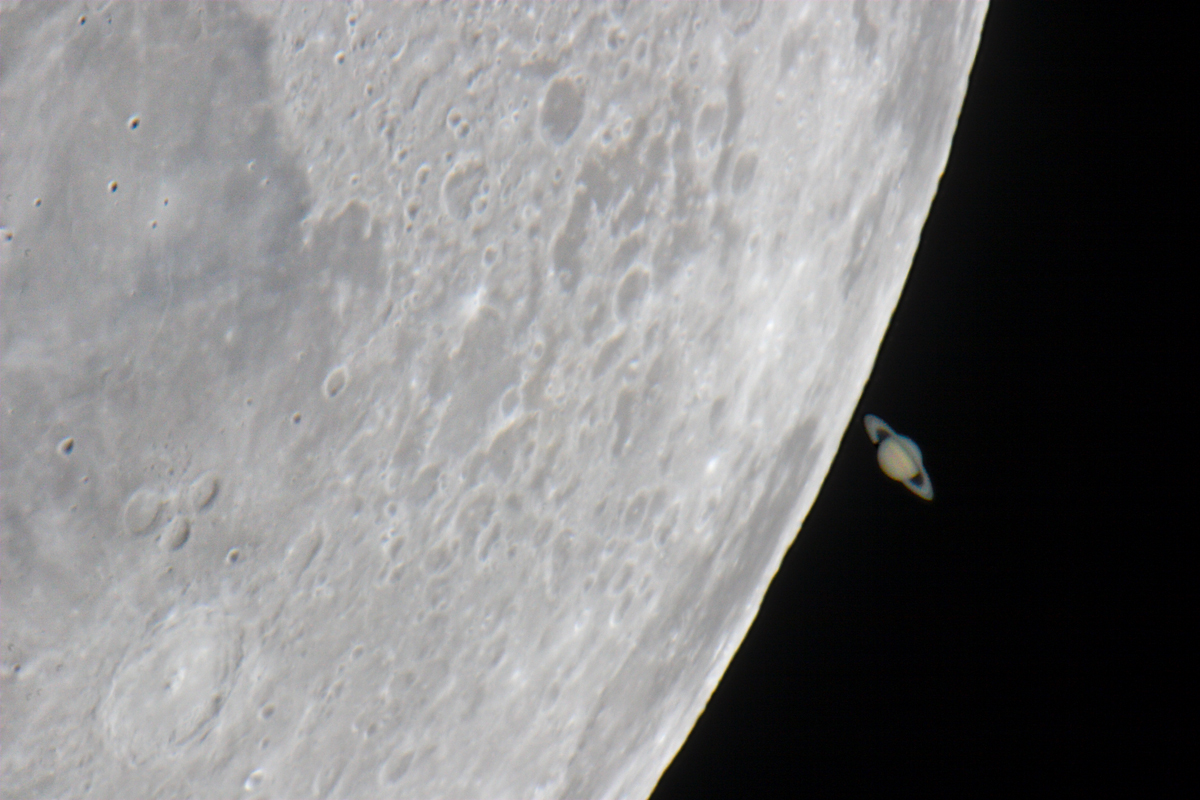
Space I feel like I should mention something about space, but like my other interests, my life has been hijacked by school. So space. It exists. Please enjoy NASA's astronomy picture of the day, Saturn photobombing a picture of the moon.
Showing posts with label space. Show all posts
Sunday, April 7, 2013
Sunday, March 3, 2013
Nebulous Nebulae
All stars begin in what are known as nebulae, beautiful clouds of space dust that are scattered about the universe. They are classified into four major groups:
H II regions, which encompass diffuse nebulae, bright nebulae, and reflection nebulae.
HII regions are named HII because they contain vast amounts of ionized hydrogen (I'm to lazy to talk about what that is so go google it or ask Connor). These form from molecular clouds (also known as stellar nurseries, isn't that just so cute?). Molecular clouds are actually pretty stable and tend to stick around for awhile, until the universe (quite literally) conspires against them, causing gravitational collapse from shock waves from super novae and fragmentation within the cloud. By gravitational collapse I mean in specific regions. This causes the gas to swirl around, creating even more gravity before eventually becoming a swirling mass of hot gas known as a protostar, which eventually becomes an actual star. The stars formed in HII regions drive away the rest of the gas with radiation pressure. Only 10% of the gas gets used to make stars. HII regions last about one or two million years.Planetary nebulae
Planetary nebulae form from stars like our sun and those not massive enough to supernova. When these stars die, instead of perishing in dramatic explosions, they expand slowly outward turning into red giants and eventually become faint clouds of gas and dust known as planetary nebula. Eventually, these nebulae expand further and become invisible, leaving behind only a small white dwarf star. Planetary nebula are actually really important because they contain heavier elements like nitrogen, carbon and oxygen. It's elements like these that help make life.
Supernova remnant
These nebulae form after the melodramatic deaths of supermassive stars. It expands with the shock wave of the explosion.
Dark nebula

These nefarious nebulae are dense clouds of dust that are dark because they block out any light that is behind them. They are all unique, some taking the shape of a horse head, others taking amorphous or serpentine forms.
So anyways, yeah nebulae are pretty cool. If anyone actually is reading this blog, leave a comment below suggesting a space related topic you'd like to me to do a post on.
HII regions are named HII because they contain vast amounts of ionized hydrogen (I'm to lazy to talk about what that is so go google it or ask Connor). These form from molecular clouds (also known as stellar nurseries, isn't that just so cute?). Molecular clouds are actually pretty stable and tend to stick around for awhile, until the universe (quite literally) conspires against them, causing gravitational collapse from shock waves from super novae and fragmentation within the cloud. By gravitational collapse I mean in specific regions. This causes the gas to swirl around, creating even more gravity before eventually becoming a swirling mass of hot gas known as a protostar, which eventually becomes an actual star. The stars formed in HII regions drive away the rest of the gas with radiation pressure. Only 10% of the gas gets used to make stars. HII regions last about one or two million years.
Planetary nebulae form from stars like our sun and those not massive enough to supernova. When these stars die, instead of perishing in dramatic explosions, they expand slowly outward turning into red giants and eventually become faint clouds of gas and dust known as planetary nebula. Eventually, these nebulae expand further and become invisible, leaving behind only a small white dwarf star. Planetary nebula are actually really important because they contain heavier elements like nitrogen, carbon and oxygen. It's elements like these that help make life.
These nebulae form after the melodramatic deaths of supermassive stars. It expands with the shock wave of the explosion.
These nefarious nebulae are dense clouds of dust that are dark because they block out any light that is behind them. They are all unique, some taking the shape of a horse head, others taking amorphous or serpentine forms.
So anyways, yeah nebulae are pretty cool. If anyone actually is reading this blog, leave a comment below suggesting a space related topic you'd like to me to do a post on.
Sunday, February 24, 2013
Documenting things because reasons
Well I was going to do a blog post about nebulae (plural form of nebula) but seeing as that would involve a lot of research and image citing and all that and its late, instead I shall shamelessly promote Connor, Sam, Max's documentary. Huzzah?
Honestly, this documentary depressed me. C'mon America, be smarter. The writing on the white board to clarify ideas was actually really good, but it also made me sad because whoever was writing has way better handwriting than I do. Am I allowed to blame American schools? But it was good because it was clear, it didn't go too fast, and it gave real solutions to the problems. And cinematographically, rack focus is just generally awesome and there was great typography. So generally, this was a good documentary. Hopefully it will win the CSPAN thing.
(For obvious reasons however, my groups documentary about Europa will be far superior, because we went to Europa to get footage. It was only like 433 million miles away )
Ok I lied about there being no nebula stuff.
Nebulas are beauteous clouds of gas and space dust and what not. It's where stars are born. And they are cool because no one really knows how exactly stars form, though we have a general idea. But since I will be writing a much longer blog post next week about it, I will just leave this as a wonderful little taste of their epicness.
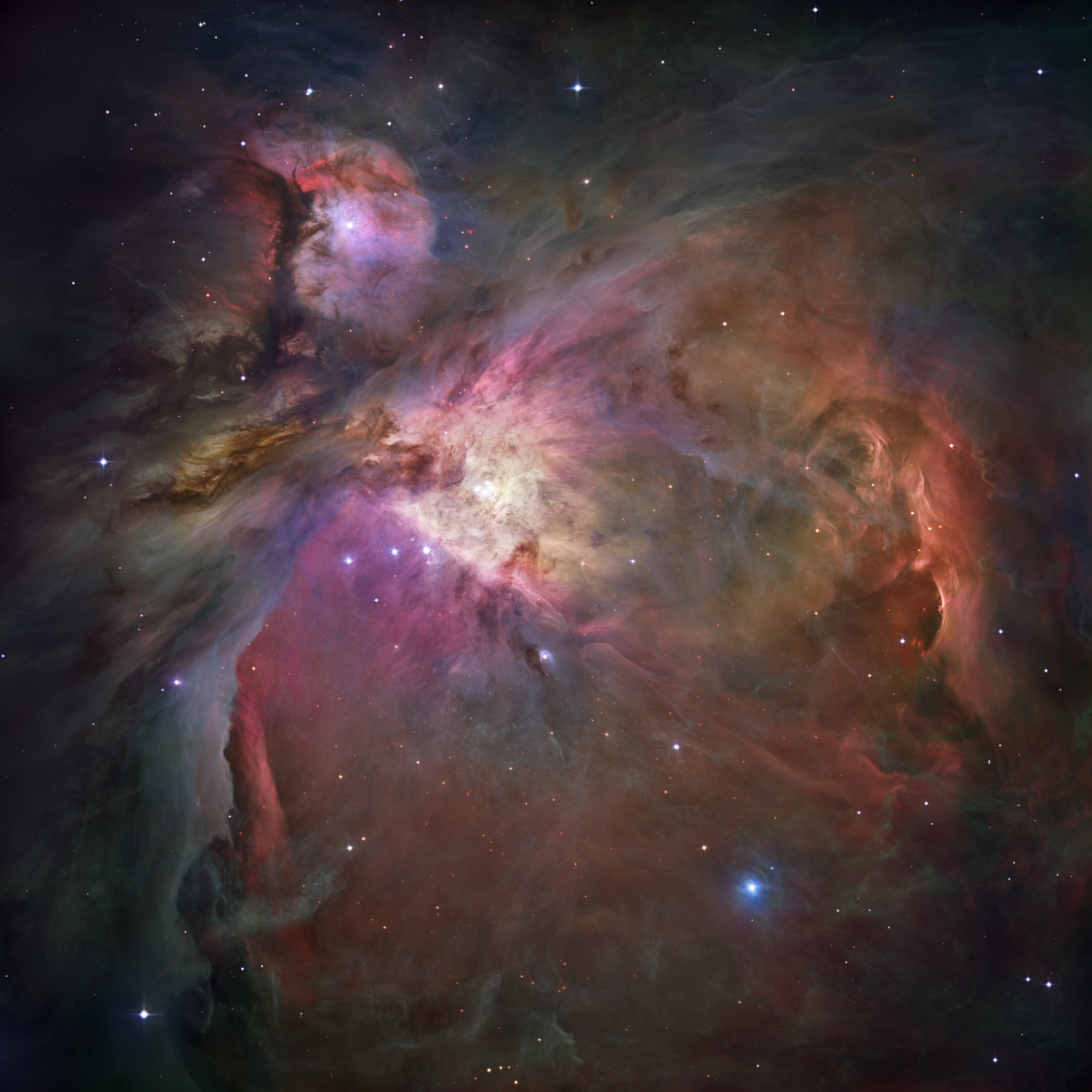
But it would be mean to just end this blog post without any sort of nebula picture, so here is a wonderful picture of the Orion Nebula.
Honestly, this documentary depressed me. C'mon America, be smarter. The writing on the white board to clarify ideas was actually really good, but it also made me sad because whoever was writing has way better handwriting than I do. Am I allowed to blame American schools? But it was good because it was clear, it didn't go too fast, and it gave real solutions to the problems. And cinematographically, rack focus is just generally awesome and there was great typography. So generally, this was a good documentary. Hopefully it will win the CSPAN thing.
(For obvious reasons however, my groups documentary about Europa will be far superior, because we went to Europa to get footage. It was only like 433 million miles away )
Ok I lied about there being no nebula stuff.
Nebulas are beauteous clouds of gas and space dust and what not. It's where stars are born. And they are cool because no one really knows how exactly stars form, though we have a general idea. But since I will be writing a much longer blog post next week about it, I will just leave this as a wonderful little taste of their epicness.
But it would be mean to just end this blog post without any sort of nebula picture, so here is a wonderful picture of the Orion Nebula.
This is why Nasa and Hubble are awesome. So beautiful.
Friday, December 7, 2012
How Our Moon Came to Be
^ And who says science isn't cool ^
When our lovely solar system was just beginning to form, the Sun was sorrounded by a bunch of asteroids, dust, and protoplanets. Protoplanets are baby planets, who develop some sort of core after creation and usually collide with eachother to form the wonderful planets we know today. Unless its a gas giant which is just a whole bunch of weird that I am not going to get into today.
So when our Earth was young, but was just about fully formed after swallowing a healthy diet of protoplanets, a new protoplanet about the size of Mars named Theia essentially barreled into it. Theia, like Earth, had a molten iron core. When they collided, most of the planets became molten, and Theia's core became part of Earth's core. A large chuck of Earth and Theia's mantles were ejected out into space, where they eventually formed an orbit of debris around the Earth. These chunks of debris eventually collided together to form the lovely Moon we know today.
Now of course the moon did not just hit earth head on, because well, when a planet the size of Mars hits a planet of a simular size, neither survive after the explosion of molten chaos. The moon hit the Earth at an angle around 45°, not too much so that Earth was destroyed, but just enough so that we do not have a lopsided planet named Theia orbiting around the sun still.
The one problem with this theory is that a collison of this magnitude would have to have caused Earth to essentially liquify, meaning that the entire crust was a post apocalypitic sea of magma. However, scientists have yet to find evidence of a sea of magma like this existing.
Fun Fact: Theia is named after a Greek Titan who gave birth to the Moon goddess, Selene. Which is awesome because the protoplanet did become the Moon. lol astronomers, you so clever.
Here's the Moon, looking all smug. It knows it could have destroyed Earth...I don't trust it. -.-
Enjoy this excellent NASA video on the evolution of the moon's surface
Subscribe to:
Comments (Atom)